
Heads up: this post contains affiliate links. If you buy through one, we may earn a small commission at no extra cost to you. As an Amazon Associate, we earn from qualifying purchases.
⚡ Quick Answer: The most useful fishing knots are the improved clinch for tying line to a hook, the Palomar for braided line, the uni knot for its versatility, the double uni for joining two lines, the loop knot for lure action, and the arbor knot for spooling your reel. Wet every knot before tightening so it does not weaken.
You can own the finest rod and reel made, but if your knot slips you go home empty-handed. The knot is the weakest link between you and the fish, so a handful of reliable ones, tied well, is one of the most valuable skills an angler can have. Here are six essential fishing knots, what each is best for, and the simple habits that keep them strong.
1. The Improved Clinch Knot
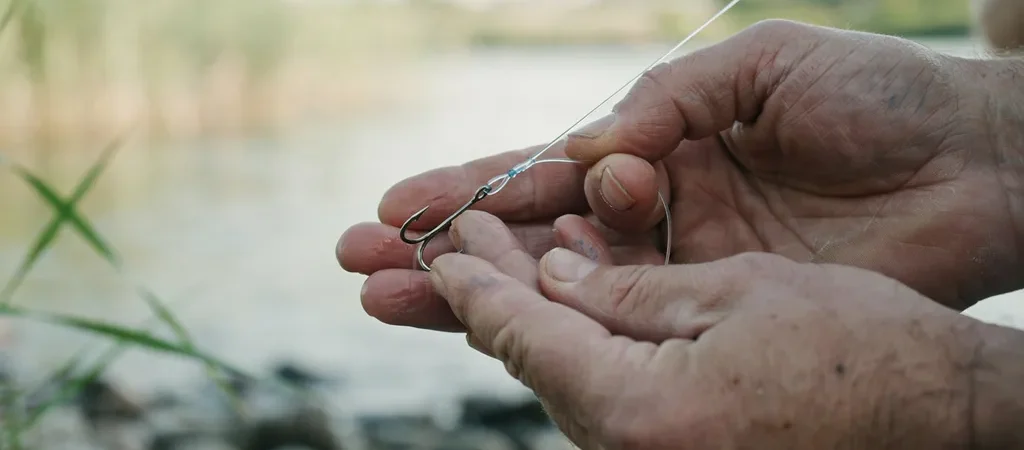
The improved clinch is the classic knot for tying monofilament or fluorocarbon line to a hook, swivel, or lure. It is quick to tie, holds well for most everyday fishing, and is the first knot many anglers learn. Pass the line through the eye, make five or six wraps, thread back through the near loop and then the big loop, then wet it and cinch it down snug.
2. The Palomar Knot
The Palomar is one of the strongest and simplest knots, and it is the top choice for braided line, which can slip in other knots. Because you double the line through the eye, it is very hard to tie wrong. Double a few inches of line through the hook eye, tie a loose overhand knot, pass the hook through the loop, then wet and pull tight. Its strength and reliability make it a favorite for serious anglers.
3. The Uni Knot
The uni knot, also called the Duncan loop, is prized for its versatility and strength. It ties line to hooks and swivels, and doubled up it joins two lines. Run the line through the eye, form a loop back alongside the standing line, wrap through the loop five or six times, then wet and draw it tight. Learn this one knot and you can handle a huge range of connections.
4. The Double Uni Knot
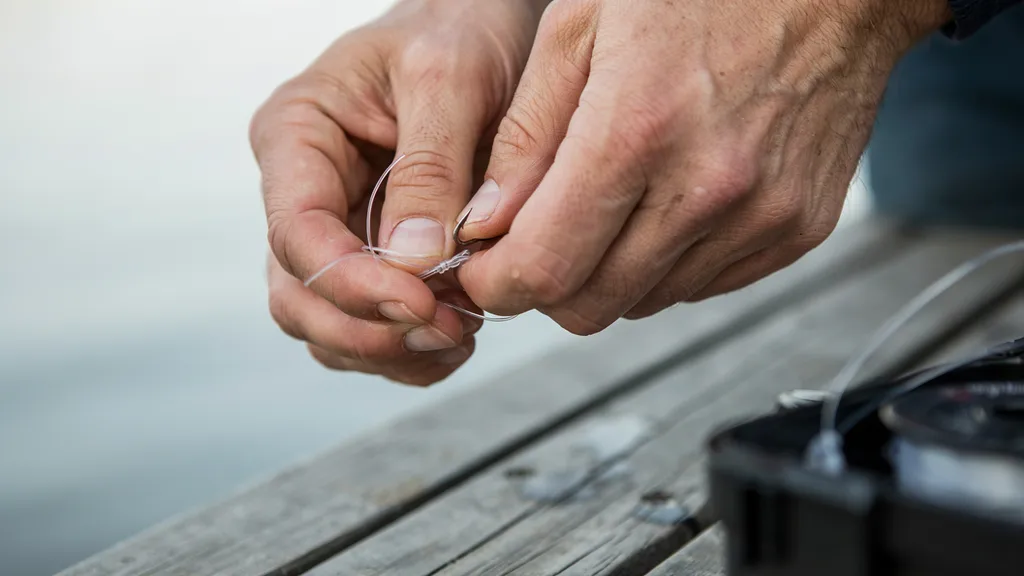
When you need to join two lines, such as tying a fluorocarbon leader to a braided main line, the double uni is dependable and not hard to learn. You simply tie a uni knot with each line around the other, then pull them together until the two knots slide tight against each other. It flows smoothly through the rod guides, which matters when you are casting or fighting a fish.
5 and 6: Loop Knot and Arbor Knot
- Loop knot: leaves an open loop at the lure eye so the bait swings and swims freely, giving lures a more lifelike action than a snug knot.
- Arbor knot: attaches fresh line to the reel spool so you can wind on a new fill of line, the very first knot you tie when spooling up.
Tie Them Right, Every Time
A knot is only as good as how you tie it, so build a few simple habits. Always wet the knot with water or saliva before tightening, since friction heat from a dry knot weakens the line. Snug knots down slowly and evenly, trim the tag end close, and give each knot a firm test pull before you cast. Practice these six at home, and you will spend your time on the water landing fish instead of retying.
Recommended Gear

- 𝐀𝐛𝐫𝐚𝐬𝐢𝐨𝐧 𝐑𝐞𝐬𝐢𝐬𝐭𝐚𝐧𝐜𝐞 – The 4-strand braided fishing line is built to handle rocks, structure, and heavy cover.
- 𝐑𝐞𝐥𝐢𝐚𝐛𝐥𝐞 𝐏𝐞𝐫𝐟𝐨𝐫𝐦𝐚𝐧𝐜𝐞 – Our weaving process helps ensure reliable performance for freshwater fishing.
- 𝐋𝐨𝐰 𝐌𝐞𝐦𝐨𝐫𝐲 – Helps reduce tangles and improves casting control.
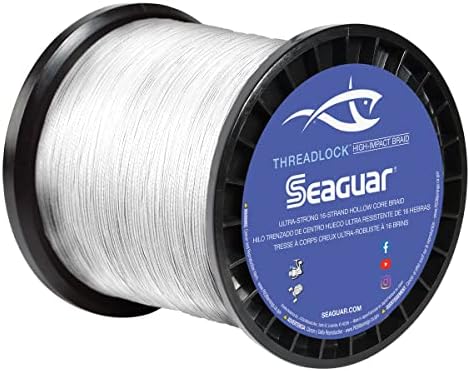
- The Seaguar Threadlock Hollow Core Braid is a high performance line that features 16 strands in a high-density weave for…
- This braided fishing line is exceptionally strong and smooth with unmatched abrasion resistance.
- Hollow core for easy knotless leader connections to Seagaur Fluorocarbon Leader material.

- Made in China
- Package dimension : 4.6 cm x 10.3 cm x 13.4 cm
- Product type : FISHING LINE
Frequently Asked Questions
What is the strongest fishing knot?
The Palomar knot is one of the strongest and simplest, and it is the top choice for braided line, which slips in many other knots. Because you double the line through the eye, it is hard to tie wrong. The improved clinch and uni knots are also strong, reliable choices for everyday fishing.
What fishing knot should a beginner learn first?
Start with the improved clinch knot for tying line to a hook or lure, since it is quick and works for most everyday fishing. Add the Palomar knot for braided line and the uni knot for its versatility. Those three knots handle the large majority of situations a new angler will face.
Why do my fishing knots keep breaking?
The most common cause is tying a dry knot, since friction heat weakens the line as you cinch it. Always wet the knot with water or saliva before tightening, snug it down slowly and evenly, and trim the tag end close. Also match the knot to your line type, especially with slippery braid.

Written by Tom Rivera · Fishing & Hunting
Tom has spent four decades outdoors — on lakes, rivers, and treestands — and still fishes most weekends. These days his favorite catch is watching his grandkids reel in their first bluegill.