
Heads up: this post contains affiliate links. If you buy through one, we may earn a small commission at no extra cost to you. As an Amazon Associate, we earn from qualifying purchases.
⚡ Quick Answer: To hike with your dog: build distance gradually (dogs need training miles too), bring 1 oz of water per pound of dog per day, keep them leashed where required, and check paws regularly — pad injuries end more dog hikes than fatigue. Skip hot afternoons; pavement and rock burn paws at temps that feel fine to you.
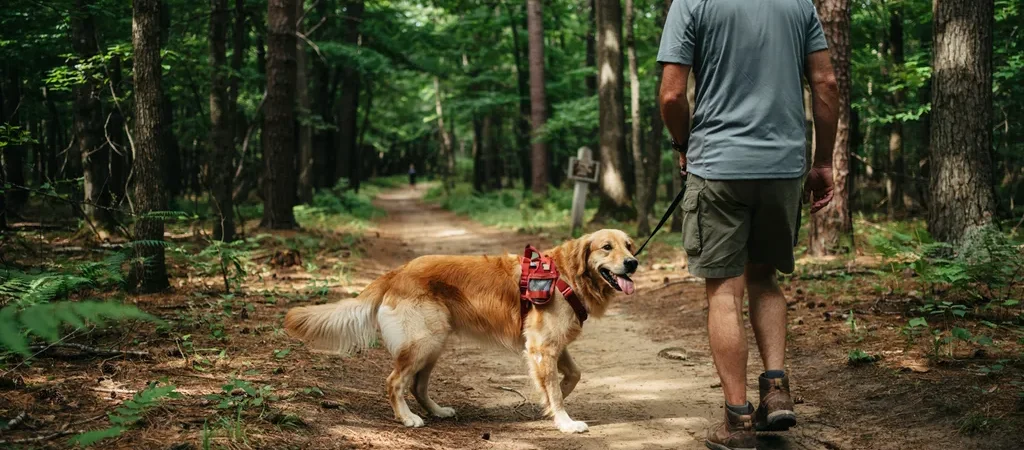
A good trail dog is the best hiking partner there is: always enthusiastic, never checks their phone, and finds every interesting smell within a quarter mile. But dogs hide discomfort until it’s serious, so the humans have to do the planning. Here’s how to keep tails wagging from trailhead to truck.
Before the First Big Hike
- Build fitness like you would your own: a couch dog can’t do 10 miles any more than a couch human. Start with 2–3 mile walks and add distance weekly.
- Vaccines, tick prevention, and a solid recall come first — trails mean wildlife, other dogs, and ticks (see our tick defense guide — permethrin-treated human clothes help protect dogs sharing your tent, but never apply permethrin directly to cats and check dog-safe products with your vet).
- Check the rules: most national park trails prohibit dogs; national forests and most state parks welcome them leashed. Know before you drive.
- Puppies and seniors: growing joints and old joints both need shorter days — ask your vet about distance.
The Dog Day-Pack List
- Water and a bowl: about 1 oz per pound of body weight for a full day, more in heat. Don’t rely on streams (giardia gets dogs too).
- High-value snacks — hiking dogs burn serious calories.
- Leash (6 ft, non-retractable on trails), waste bags (pack them OUT), and a light for their collar at dusk.
- Paw care: tweezers for thorns, vet wrap, and a bootie for an injured pad.
- Fit dogs can carry their own kit — up to ~15–20% of body weight for healthy adults in a proper pack:

- FITS LIKE A HARNESS. WORKS LIKE A PACK. Foam-padded chassis and five points of adjustment ensure a bounce-free fit for f…
- FIND THE RIGHT FIT WITH EASE. Not sure which size to choose? Check out our sizing chart image and how-to-fit video to he…
- HIKING TRAIL READY SADDLEBAGS. Radial cut, trail-minded saddle bags with internal compression straps give dogs a sense o…

- ✅【PORTABLE & COLLAPSIBLE BOWLS】Our Kytely large collapsible dog bowls only 0.7 inch when folded, simply Pop-Up and then …
- ✅【LARGE CAPACITY】Size of the dog bowl is 7 inch wide, 2.75 inch height. Each bowl can hold up to 34 fluid ounces of wate…
- ✅【PREMIUM QUALITY】Made of environmentally friendly TPE materials, BPA free and Lead-free, odorless, durable and friendly…
On-Trail Etiquette and Safety
- Yield to other hikers and leash up when passing horses, kids, or other dogs.
- Watch the paws: hot rock, sharp scree, and ice ball buildup in winter. If YOU can’t hold your hand on the surface for 5 seconds, it’s burning their pads.
- Heat is the big danger — dogs can’t sweat. Heavy panting, drool, and lagging mean shade and water NOW. Hike mornings in summer.
- Wildlife rule: a leashed dog can’t start the bear encounter that an off-leash dog brings back to you (see our bear guide).
After the Hike
Full-body tick check (ears, armpits, between toes), paw inspection, and a big dinner. A tired trail dog sleeping in the truck is one of hiking’s best sights. For overnight adventures, our camping with dogs guide (coming soon) and family camping basics carry the plan forward.
Frequently Asked Questions
Is hiking good for dogs?
Yes, hiking is great exercise and enrichment for most healthy dogs, but build up their fitness gradually just as you would your own. Consider your dog breed, age, and health, watch for signs of fatigue or overheating, and protect their paws. Always bring enough water for both of you.
What do I need to bring hiking with my dog?
Bring plenty of water and a collapsible bowl, a sturdy leash, waste bags, and a basic first aid kit. Check paws for cuts, carry a way to cool your dog in heat, and bring ID tags. Confirm the trail allows dogs, since many national park trails do not.
How do you keep a dog safe on a hike?
Keep your dog leashed for safety around wildlife and other hikers, bring enough water, watch for overheating and paw injuries, and check for ticks afterward. Know the trail rules, avoid hiking in extreme heat, and always pack out your dog waste to protect the trail and water.

Written by Sarah Brooks · Hiking & National Parks
Sarah fell in love with the outdoors on a childhood trip to the Smokies and has logged thousands of trail miles across 30+ national parks since. She is happiest above treeline with a map in hand.