
Heads up: this post contains affiliate links. If you buy through one, we may earn a small commission at no extra cost to you. As an Amazon Associate, we earn from qualifying purchases.
⚡ Quick Answer: Lightning safety for hikers, anglers, and campers — the 30-30 rule, where to shelter (and where never to), the lightning position, and first aid for strike victims.
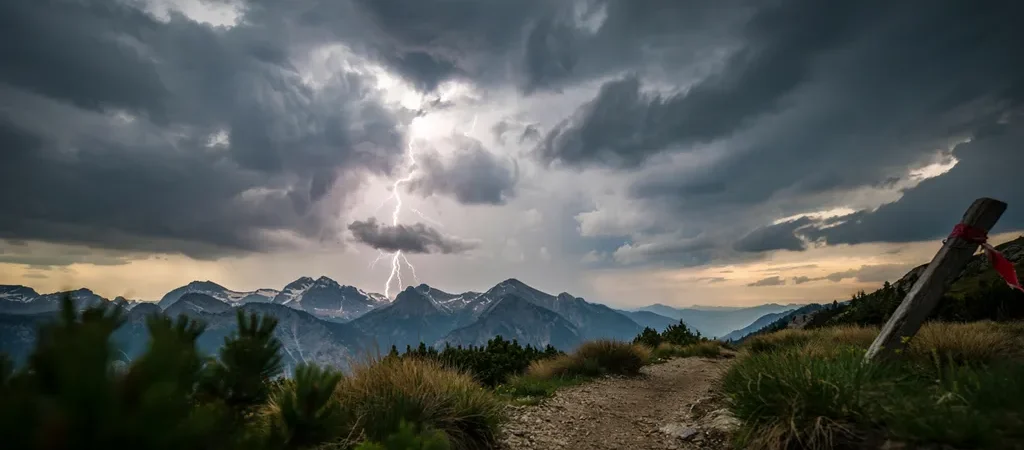
Lightning kills about 20 people a year in the US and injures hundreds more — and hikers, anglers, boaters, and golfers are disproportionately represented. The frustrating part: most strikes are avoidable with timing and terrain choices. Here’s how to read a building storm, and exactly what to do when you’re caught out.
The 30-30 Rule
When you see a flash, count until you hear thunder: sound travels a mile every ~5 seconds. 30 seconds or less (6 miles) means the storm can already reach you — seek safer ground now. Then wait 30 minutes after the last thunder before resuming. Lightning routinely strikes miles ahead of the rain; “it’s not raining yet” is how people get hit.
Read the Sky Before It Reads You
- Towering, cauliflower-topped clouds building by late morning = afternoon thunderstorms. In the mountains this is a near-daily summer pattern.
- Plan summits and exposed ridges for before noon; be heading down by early afternoon.
- Sudden wind shifts, temperature drops, and darkening bases mean the storm is close.
- Feel your hair stand up or hear buzzing/crackling from rocks and poles? Charge is building where you stand — move and assume the position below immediately.
Where to Go (Best to Worst)
- Best: a building or a hard-topped vehicle. Nothing outdoors compares.
- Good: dense, uniform forest well below treeline, away from the tallest trunks.
- Bad: open ground, ridgelines, summits, lone trees, cave mouths and rock overhangs (ground current arcs across openings), and anywhere you’re the tallest thing.
- Get off the water immediately — boats and swimmers are the tallest point for hundreds of yards.
Caught in the Open: The Lightning Position
- Spread your group out 50+ feet apart — multiple casualties from one strike is the pattern rescuers dread.
- Ditch metal-framed packs and poles a short distance away.
- Crouch on the balls of your feet, heels together, head down, hands over ears — minimize height AND ground contact. Do not lie flat: ground current is the most common strike mechanism.
- Insulate if possible: crouch on a foam pad or coiled rope.
- Keep moving toward safer terrain between close strikes if you can — the position is a last resort, not a plan.
If Someone Is Struck
Strike victims carry no charge — help immediately. Call for rescue, start CPR if they’re not breathing (lightning stops hearts that CPR often restarts), treat burns and injuries, and watch everyone hit for hours; symptoms can be delayed. This is where a satellite messenger and wilderness first aid earn their keep.
Check forecasts, summit early, and respect the 30-30 rule — that combination avoids nearly every lightning emergency. More storm smarts in our weather reading guide and emergency radio picks.
Recommended Gear

- NOAA WEATHER BAND RADIO & MULTI-BAND RECEPTION – This emergency radio receives 7 NOAA weather broadcasts (must be powere…
- 12000mAh POWER BANK & MULTIPLE CHARGING OPTIONS – The built-in rechargeable battery helps charge phones and small USB de…
- 8500MM2 LARGE SOLAR PANEL + HAND CRANK BACKUP – The oversized solar panel helps collect sunlight for emergency rechargin…
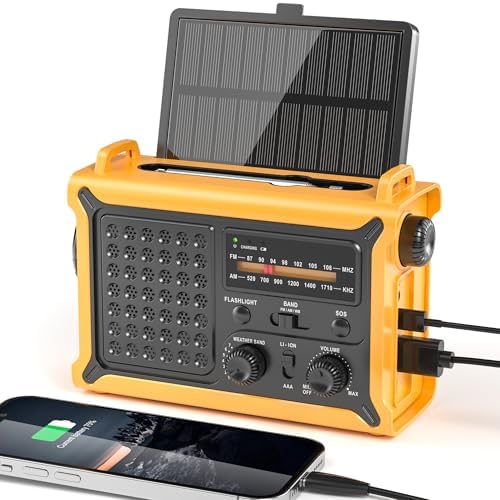
- 【Reliable 𝗡𝗢𝗔𝗔/𝗔𝗠/𝗙𝗠 Reception with Clear Sound】With a high-sensitivity signal chip, noise-reduction circuitry, and an e…
- 【𝗛𝗶𝗴𝗵-𝗘𝗳𝗳𝗶𝗰𝗶𝗲𝗻𝗰𝘆 𝗦𝗼𝗹𝗮𝗿 𝗖𝗵𝗮𝗿𝗴𝗶𝗻𝗴 with Extra-Large Panel】The solar radio features a massive 8500mm² high-efficiency monocr…
- 【𝗛𝗶𝗴𝗵-𝗧𝗼𝗿𝗾𝘂𝗲 𝗖𝗿𝗮𝗻𝗸 𝗣𝗼𝘄𝗲𝗿 for Fast Effortless Charging】With an upgraded internal generator—featuring a larger copper coil…
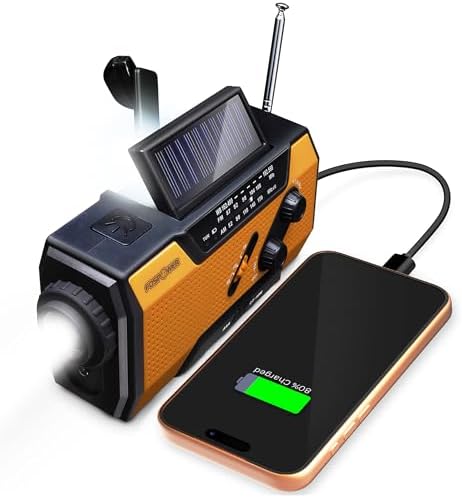
- [7400mWh (2000mAh) POWER BANK WILL KEEP DEVICES POWERED] The FosPower FOSPWB-2376 emergency radio incorporates a 7400mWh…
- [3 POWER SOURCES POWER WHEN YOU NEED IT] Use the emergency weather radio’s 3 power sources when you need a boost of powe…
- [2 LIGHT SOURCES ALWAYS POWERED] The emergency crank radio can also provide light. The 4 LED reading light and 1W flashl…
Frequently Asked Questions
What should you do if caught in a lightning storm while hiking?
Descend from ridges and peaks immediately, avoid lone trees and open ground, and get into uniform forest or a low spot. Spread your group 50-plus feet apart, and assume the lightning position — crouched on your pack, feet together — only as a last resort.
How far away is lightning if I hear thunder?
Count seconds between flash and thunder and divide by five for miles. Thirty seconds means six miles — already within strike range. Follow the 30-30 rule: shelter at 30 seconds or less, wait 30 minutes after the last thunder.
Is a tent safe in a lightning storm?
No — a tent provides zero lightning protection, and its poles do not help. A hard-topped vehicle or a real building is safe; a tent is merely dry. Plan afternoon mountain itineraries around the storm-building pattern instead.

Written by Sarah Brooks · Hiking & National Parks
Sarah fell in love with the outdoors on a childhood trip to the Smokies and has logged thousands of trail miles across 30+ national parks since. She is happiest above treeline with a map in hand.