
Heads up: this post contains affiliate links. If you buy through one, we may earn a small commission at no extra cost to you. As an Amazon Associate, we earn from qualifying purchases.
⚡ Quick Answer: Flash flood safety in three rules: never enter slot canyons or camp in washes when storms are ANYWHERE in the drainage (the rain can be 20 miles away), move UP at the first sign — rising water, debris, a roar, or sudden mud — and never drive or wade moving floodwater. Six inches knocks you down; a foot floats a car.
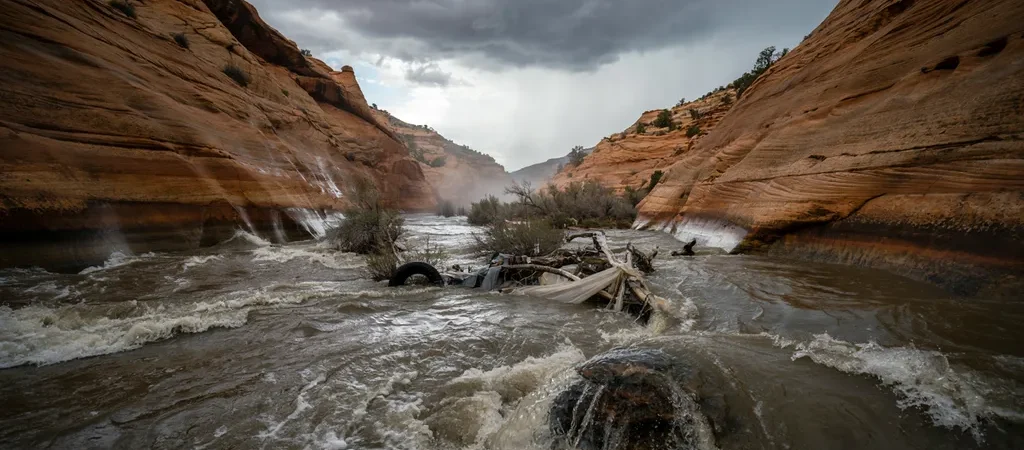
Flash floods kill more people in the US than lightning most years, and the victims are rarely doing anything reckless — they’re hiking a dry wash under blue sky while a storm dumps on mountains they can’t see. Flood safety is almost entirely about reading terrain and forecasts BEFORE the water arrives. Here’s the full picture.
Where Flash Floods Happen
- Slot canyons: the deadliest terrain — a narrow canyon concentrates a distant storm into a wall of water with nowhere to climb.
- Dry washes and arroyos: that convenient sandy “trail” IS the river; it just isn’t running yet.
- Canyon campsites: the flat sandy bench beside the creek is flood-deposited — that’s why it’s flat and sandy.
- Burn scars: recent wildfire areas shed water instantly; a modest storm becomes a debris flow.
- Low-water road crossings: where most flood deaths actually happen — in vehicles.
Before You Go
- Check the forecast for the ENTIRE drainage, not just your location — the storm that floods your canyon may be 20+ miles upstream.
- In monsoon season (July–September in the Southwest), do slot canyons in the morning; storms build after noon.
- Rangers know: flash-flood ratings are posted daily at parks like Zion — a “probable” rating means pick another hike, period.
- Identify escape routes on the map: where can you climb 30+ feet quickly?
Warning Signs (Minutes Matter)
- Water rising, or clear water turning muddy — the flood’s calling card.
- Floating debris: sticks and leaves arriving on the current.
- A roar upstream — many survivors describe “a freight train.”
- Sudden storm clouds over the high country, even in sunshine where you stand.
- Any of these: climb NOW. Abandon gear. Height is the only thing that matters — 30 feet up beats a quarter mile downstream.
The Vehicle Rule: Turn Around, Don’t Drown
Half of flood deaths are vehicles driving into water on roads. The math is unforgiving: 6 inches of moving water staggers an adult, 12 inches floats most cars, 18–24 inches carries away trucks and SUVs. You cannot judge depth or the road surface under muddy water. Turn around — the detour costs minutes.
If You Are Caught
- On foot: get above the water any way possible; do NOT try to outrun a flood downstream.
- Swept away: feet up and downstream (the river-swim position), grab for anything anchored, work toward the edge.
- In a floating car: windows down immediately, out and onto the roof, climb to anything higher.
- Afterward: floodwater is contaminated and banks are undermined — treat every crossing as suspect for days.
Respect the drainage, watch the sky over the high country, and give up the hike when the forecast says so — the canyon will be there next week. Related reading: lightning safety, desert hiking, and reading weather.
Recommended Gear
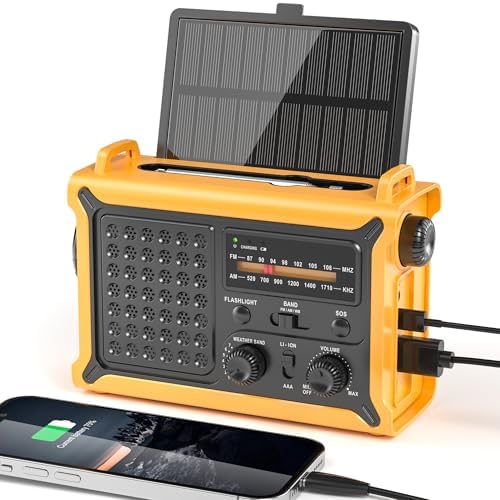
- 【Reliable 𝗡𝗢𝗔𝗔/𝗔𝗠/𝗙𝗠 Reception with Clear Sound】With a high-sensitivity signal chip, noise-reduction circuitry, and an e…
- 【𝗛𝗶𝗴𝗵-𝗘𝗳𝗳𝗶𝗰𝗶𝗲𝗻𝗰𝘆 𝗦𝗼𝗹𝗮𝗿 𝗖𝗵𝗮𝗿𝗴𝗶𝗻𝗴 with Extra-Large Panel】The solar radio features a massive 8500mm² high-efficiency monocr…
- 【𝗛𝗶𝗴𝗵-𝗧𝗼𝗿𝗾𝘂𝗲 𝗖𝗿𝗮𝗻𝗸 𝗣𝗼𝘄𝗲𝗿 for Fast Effortless Charging】With an upgraded internal generator—featuring a larger copper coil…
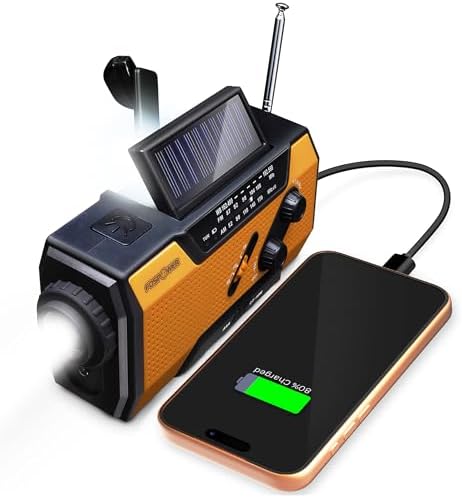
- [7400mWh (2000mAh) POWER BANK WILL KEEP DEVICES POWERED] The FosPower FOSPWB-2376 emergency radio incorporates a 7400mWh…
- [3 POWER SOURCES POWER WHEN YOU NEED IT] Use the emergency weather radio’s 3 power sources when you need a boost of powe…
- [2 LIGHT SOURCES ALWAYS POWERED] The emergency crank radio can also provide light. The 4 LED reading light and 1W flashl…
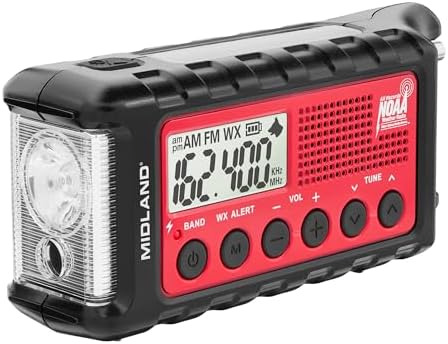
- MULTIPLE POWER SOURCES – The ER310 features 3 sustainable power sources to recharge your radio: Solar Panel, Hand Crank,…
- EMERGENCY FLASHLIGHT – The SOS FLASHLIGHT BEACON flashes Morse code in an emergency scenario and the Bright CREE LED (13…
- NOAA WEATHER SCAN + ALERT – NOAA Weather Scan will automatically scan through 7 available weather (WX) band channels and…
Frequently Asked Questions
What are the warning signs of a flash flood?
Rising or muddying water, floating debris, and a roar upstream — but the deadliest floods arrive under blue skies from storms miles away. In canyon country, the forecast for the entire drainage matters, not the weather overhead.
Where do flash floods happen most?
Slot canyons, narrow drainages, dry washes, and burn scars — anywhere water concentrates fast with nowhere to spread. The desert Southwest is the classic zone, monsoon season (July–September) the classic time.
What should you do if caught in a flash flood?
Climb — immediately and vertically, abandoning gear. Even 10–15 feet of elevation beats any horizontal escape; flood fronts outrun humans in confined terrain. Never cross flowing water above your ankles: six inches can take your feet, two feet takes vehicles.

Written by Sarah Brooks · Hiking & National Parks
Sarah fell in love with the outdoors on a childhood trip to the Smokies and has logged thousands of trail miles across 30+ national parks since. She is happiest above treeline with a map in hand.