Heads up: this post contains affiliate links. If you buy through one, we may earn a small commission at no extra cost to you. As an Amazon Associate, we earn from qualifying purchases.
⚡ Quick Answer: Altitude sickness (AMS) hits above ~8,000 feet: headache plus fatigue, nausea, poor sleep, or dizziness. Prevent it by ascending slowly (sleep no more than 1,000–1,500 ft higher per night above 9,000 ft), hydrating, and taking a rest day per 3,000 ft gained. Mild AMS = stop ascending until better. Worsening symptoms = descend. Confusion or breathlessness at rest = descend NOW, it’s an emergency.
Flatlanders planning a Colorado or Sierra trip meet altitude before they meet the trailhead — and altitude doesn’t care how fit you are. Marathoners get sick at 10,000 feet while their sedentary friends feel fine. What altitude respects is TIME. Here’s how to give your body the time it needs, and what to do when symptoms show anyway.
What Altitude Does
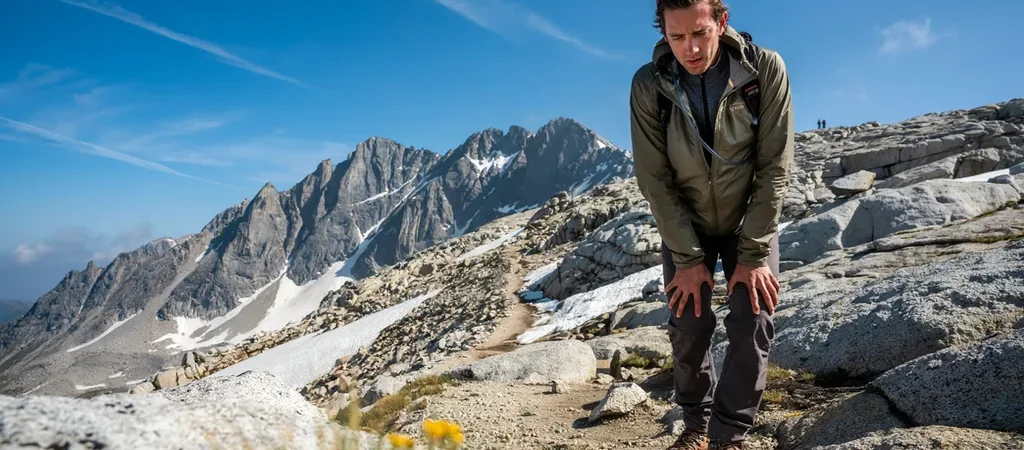
Above 8,000 feet the air holds meaningfully less oxygen per breath. Your body adapts brilliantly — more red blood cells, deeper breathing — but adaptation takes days, and outpacing it causes acute mountain sickness (AMS): the altitude hangover. Almost everyone who flies from sea level to a 10,000-foot trailhead and starts climbing feels something.
Recognize the Ladder
- AMS (common, manageable): headache PLUS any of: fatigue, nausea, loss of appetite, dizziness, lousy sleep. Feels like a hangover you didn’t earn.
- HACE (rare, deadly): the brain swelling — severe headache unrelieved by meds, confusion, stumbling like drunkenness. DESCEND immediately, this kills in hours.
- HAPE (rare, deadly): fluid in the lungs — breathless AT REST, wet cough, gurgling, blue lips. DESCEND immediately.
- The golden rules: don’t ascend with symptoms; descend if they worsen; never leave a symptomatic person alone.
Prevention: The Slow Game
- Stage your arrival: sleep a night at moderate altitude (Denver, 5,280 ft) before heading to 9,000+. Two nights is better.
- Climb high, sleep low: day hikes can go up; your sleeping elevation should rise no more than 1,000–1,500 ft per night above 9,000 ft.
- Hydrate and eat carbs — altitude suppresses both thirst and appetite exactly when you need them.
- Go easy the first 48 hours: the summit attempt belongs at the end of the trip, not the start.
- Skip alcohol the first two nights; it mimics and masks AMS.
- Talk to your doctor about acetazolamide if you’ve been hit before or the itinerary is aggressive — it genuinely helps acclimatization.
Treating Mild AMS
- Stop ascending. Rest at current elevation — most AMS resolves in 1–2 days of patience.
- Ibuprofen for the headache, fluids, easy calories.
- Improve = carry on gently. Same or worse after a day = descend 1,000–2,000 ft; relief is usually dramatic.
Altitude rewards humility and itinerary design more than fitness — build in the extra night, and the high country gives you everything. Planning tools: our beginner summits, backpacking trails, and wilderness first aid guides.
Recommended Gear

- PORTABLE OXYGEN CANISTER – LIGHTWEIGHT & EASY-TO-CARRY Our lightweight 7 Oz pure oxygen canister delivers up to 450 cont…
- RESPIRATORY SUPPORT & ENERGY BOOST Feel refreshed and energized with oxygen that’s 4.5× higher in concentration than nor…
- SUPPORTS YOUR ACTIVE LIFESTYLE From high-intensity workouts to high-altitude hikes, gO2Therapy provides extra oxygen to …

- FILLED WITH 98% OXYGEN: All-natural, prescription-free respiratory support that can be used by anyone, anytime, anywhere…
- 12 LITERS: The largest canister in the Boost Oxygen lineup, designed for longer-lasting use with up to 225 one-second in…
- CONVENIENT, LIGHTWEIGHT, AND RECYCLABLE: this 2-pack of Boost Oxygen comes with portable oxygen canisters for on-the-go …

- Package includes a 2-pack of 10-liter and 3-pack of 5-liter flavorless canned oxygen canisters
- All-natural supplemental oxygen bottles are naturally flavored and are designed to help you breathe and feel better
- The 5-liter bottle provides users with more than 100 1-second breaths, and the 10-liter bottle provides users with more …
Frequently Asked Questions
At what elevation does altitude sickness start?
Most people feel effects above 8,000 feet, though sensitive individuals notice symptoms as low as 6,000. Sleeping altitude matters more than daytime highs — ‘climb high, sleep low’ exists for a reason.
What are the symptoms of altitude sickness?
It feels like a hangover: headache, nausea, fatigue, poor sleep, and loss of appetite, typically 6 to 12 hours after arrival. Worsening symptoms, confusion, or breathlessness at rest signal dangerous progression — descend.
How do you prevent altitude sickness?
Ascend gradually (once above 10,000 feet, raise sleeping elevation no more than 1,000–1,500 feet a night), hydrate, go easy the first two days, and skip alcohol. Talk to your doctor about acetazolamide for fast ascents.
Written by Sarah Brooks · Hiking & National Parks
Sarah fell in love with the outdoors on a childhood trip to the Smokies and has logged thousands of trail miles across 30+ national parks since. She is happiest above treeline with a map in hand.