
Heads up: this post contains affiliate links. If you buy through one, we may earn a small commission at no extra cost to you. As an Amazon Associate, we earn from qualifying purchases.
⚡ Quick Answer: To signal for help in the wilderness: use groups of THREE (three whistle blasts, three fires, three flashes — the universal distress code), get visible in open ground with bright gear, use a signal mirror toward aircraft or distant ridges by day and light by night, and stay put once you’ve signaled — a moving target is a missed target.
Rescue teams say the same thing after nearly every search: the person was harder to find than they should have been. Signaling is the survival skill that actually ends survival situations, and it’s mostly about being loud, bright, and repetitive in the right patterns. Here’s the complete toolkit, from whistle to satellite.
The Rule of Threes
Three of anything, repeated, is the international distress signal: three whistle blasts, three shouts, three fires in a triangle, three flashes of light. Pause between sets so responders can locate the direction. One long anything is ambiguous; three is unmistakable.
Sound: The Whistle Beats Your Voice
- A whistle carries a mile-plus, works exhausted, and never goes hoarse — a screaming voice is done in twenty minutes.
- Three blasts, wait a minute (listening!), repeat. Rescuers reply with one or two blasts.
- Clip it to your pack strap, not inside the pack. Every family member gets one — kids especially (teach them: lost = sit down, blow three, repeat).
Sight: Make the Landscape Look Wrong
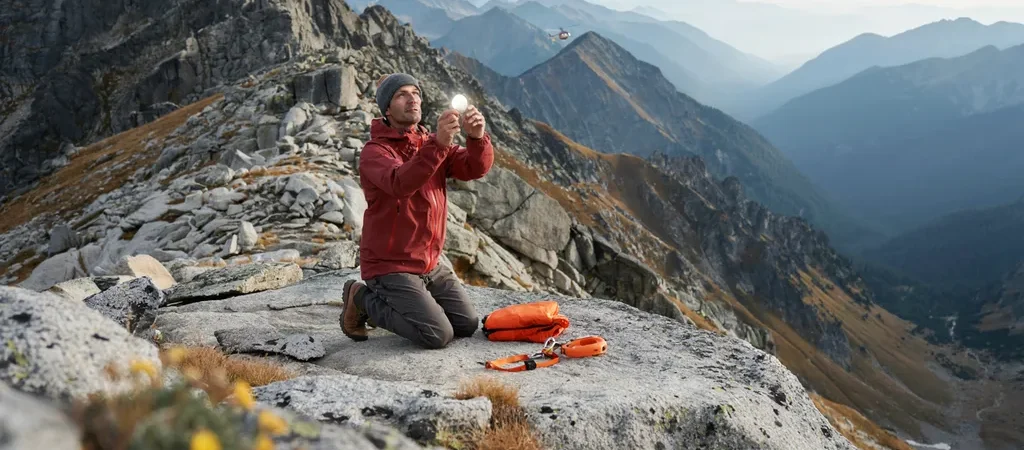
- Signal mirror: the most underrated tool — a mirror flash is visible 10+ miles and has ended countless searches. Aim using the sighting hole at aircraft, vehicles, or distant ridgelines, and sweep the horizon periodically even if you see nothing.
- Contrast and geometry: nature has no straight lines or neon. Lay bright gear in a giant triangle or X in open ground; stamp SOS in snow or sand 10+ feet tall.
- Smoke by day, flame by night: green boughs on a hot fire make white smoke columns; three fires in a triangle is the classic. Mind fire danger — a signal fire that becomes a wildfire helps no one (see wildfire safety when it publishes).
- Headlamp strobe at night toward any light or aircraft — most headlamps have the mode nobody ever uses until now.
Phones and Satellites
- Text before calling — texts squeeze through signal that calls can’t, and many counties accept Text-to-911.
- Climb for signal ONLY if it’s safe and close; otherwise conserve battery: airplane mode, low brightness, try from high points once or twice a day.
- Newer phones include satellite SOS — know whether yours does BEFORE the trip.
- The real answer for remote country is a dedicated beacon — our satellite messenger guide covers the options that turn “missing” into “rescued by dinner.”
The Two-Ounce Signal Kit
Whistle + mirror + bright bandana lives permanently in every pack:
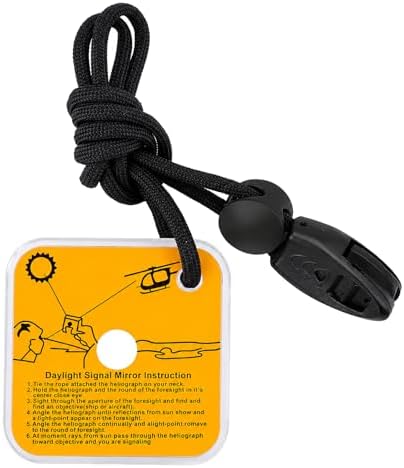
- Sight survival mirror military is an essential option in any survival emergency kit. Built-in precision aiming system fo…
- With whistle: In an emergency or when calling for help, you can make a loud sound as long as you blow it hard, so that r…
- Acrylic material, durable & strong toughness, not easy to break.

- Aim Indicator Functionality: One standout feature of this rescue mirror tool is its aim indicator. This crucial addition…
- Useful in Various Light Conditions: This reflective signal mirror tool is highly versatile and efficient in different li…
- High-Quality Acrylic Material: This outdoor multifunctional rescue mirror tool is created from top-grade acrylic materia…
Signaling works best combined with the rest of the playbook: what to do when lost (stay put!), emergency shelter, and the one-pound survival kit.
Frequently Asked Questions
What is the universal distress signal?
Three of anything: three whistle blasts, three fires, three flashes, three shouts — repeated with pauses to listen. One whistle blast means ‘where are you,’ two means ‘come to me,’ three means emergency.
What is the best signaling device for hikers?
A whistle, permanently attached to your pack strap — it carries a mile-plus and never runs out of battery. Add a signal mirror for aircraft and sunny days, and consider a satellite messenger for real backcountry: the SOS button that works everywhere.
How do you signal a helicopter for rescue?
Get to open ground, make yourself big and high-contrast, and use mirror flashes or bright fabric movement — not random waving. Raise both arms in a V (yes, rescue me); one arm up and one down means no. Secure loose gear before it lands.

Written by Sarah Brooks · Hiking & National Parks
Sarah fell in love with the outdoors on a childhood trip to the Smokies and has logged thousands of trail miles across 30+ national parks since. She is happiest above treeline with a map in hand.